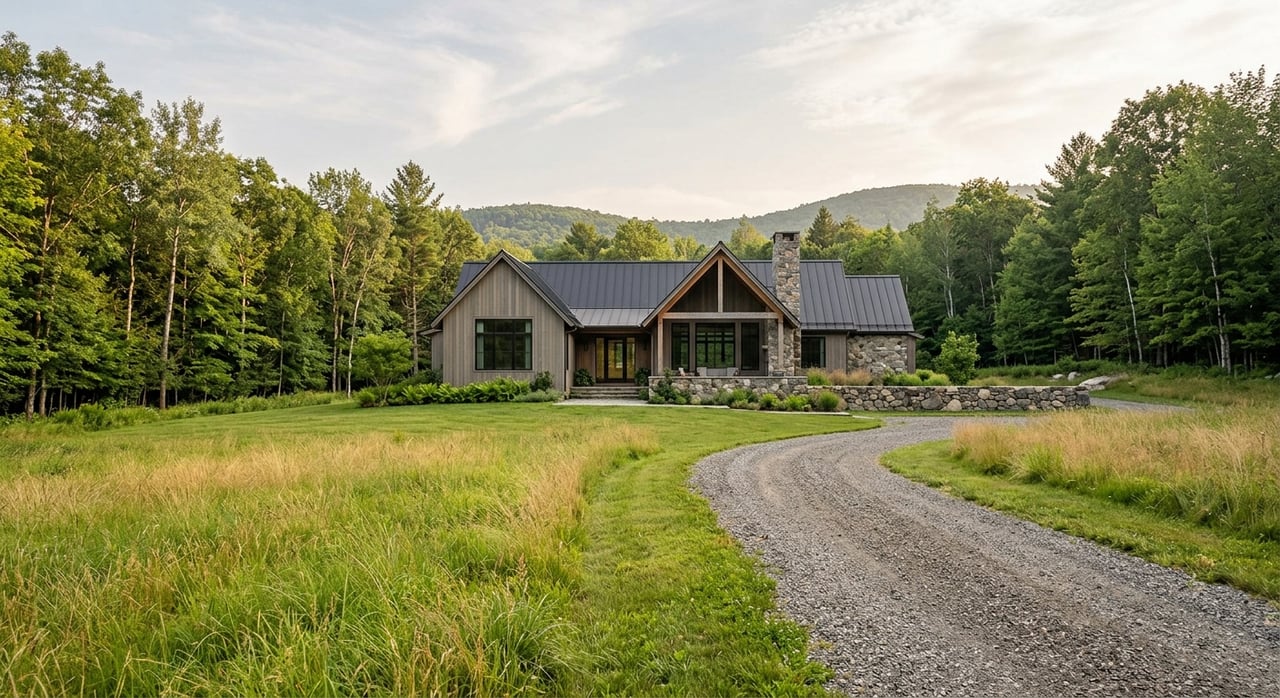
Dreaming about a home with room to spread out in Fairview? Acreage can give you privacy, views, garden space, and future flexibility, but in Buncombe County, land brings a different set of questions than a typical in-town purchase. If you are thinking about buying a home with acreage in Fairview, the smartest move is to evaluate the site as carefully as the house itself. Let’s dive in.
Why acreage needs extra homework
In Fairview, buying a property with land is often a site-feasibility decision first. Buncombe County’s development checklist tells buyers to verify zoning, flood zone status, driveway access, sewer and water availability, deed restrictions, and other development limits before moving forward.
That matters because two properties with the same number of acres can offer very different options. One may have straightforward access and room for future projects, while another may have slope, utility, or restriction issues that affect how you can use it.
Start with driveway access
A long gravel drive may feel like part of the mountain-home dream, but it can also be one of the biggest practical issues on a rural parcel. In Buncombe County, private roads and some driveways may need review by the Buncombe County Fire Marshal, especially when access is shared or when lots are not directly accessed from a state road.
If a driveway connects to the state highway system, the North Carolina Department of Transportation requires a Street and Driveway Access Permit before work begins. Some projects may also need local approval, so this is not something to leave until late in the process.
Access also affects emergency response. Buncombe County E-911 assigns addresses based on the structure’s location, and a shared driveway, easement, or right-of-way may require a Road Name Petition to meet 911 standards.
In simple terms, treat the driveway as more than a lifestyle feature. It is a safety, permitting, and usability issue that can shape how easy the property is to live on and improve later.
Access questions to ask early
- Does the property have direct legal access?
- Is the driveway shared with other parcels?
- Will the access point need NCDOT approval?
- Has the Fire Marshal reviewed the access if required?
- Will E-911 addressing require a road name or added steps?
Confirm water and wastewater options
Utilities are one of the first things to verify when buying acreage in Fairview. Buncombe County advises buyers to confirm whether public sewer is available. If it is not, the next step is a site evaluation through Environmental Health.
That evaluation requires the parcel PIN, a plat or tax map, and the proposed bedroom or restroom count. The county also states that a building permit will not be issued until septic Authorization to Construct has been issued.
Water is just as parcel-specific. The county checklist directs buyers to check whether municipal water is available and, if not, plan for the appropriate alternative water supply.
In many rural and mountain settings, septic systems are common. Buncombe County says roughly half of the county’s population depends on septic tank systems, so this is a normal part of ownership in the area, but it is still something you want to understand before you buy.
Why this matters for future plans
If you hope to add onto the house later, build a guest space, or create another structure, septic capacity and water supply can affect those plans. A property that works for today’s house may not automatically support tomorrow’s ideas.
That is why acreage buyers should think beyond whether the home is livable right now. You also want to know how the site supports future use.
Review zoning and overlay limits
Zoning is another major checkpoint when buying a home with acreage in Fairview. In Buncombe County, a zoning permit is required to obtain a building permit for land in a zoning district, and overlay districts can create extra restrictions.
Zoning inspections also verify setbacks from property lines and road rights-of-way. So even if a lot looks large, where you can actually place or add structures may be more limited than you expect.
Mountain properties can trigger additional review. Buncombe County identifies a Steep Slope/High Elevation Overlay for land above 2,500 feet with natural slopes of 35% or greater, and a Protected Ridge Overlay for properties above 3,000 feet that are at least 500 feet above the adjacent valley floor.
These rules do not mean a parcel is a bad buy. They do mean you should understand the property’s development envelope before you fall in love with the setting.
Common zoning-related concerns
- Required setbacks from lot lines
- Road right-of-way setbacks
- Steep slope or high elevation review
- Protected ridge restrictions
- Limits on future additions or detached buildings
Check floodplain and land-disturbance rules
Wooded land and mountain views do not automatically mean flood concerns are off the table. Buncombe County regulates development in the 100-year floodplain, and in floodways and non-encroachment areas, no development can occur without an engineered No Impact study.
For buyers, this means you should confirm whether any part of the property falls in a regulated flood area. That can affect future structures, grading plans, and overall use of the land.
Land disturbance is another issue that often surprises acreage buyers. Buncombe County says an erosion control permit is required for land-disturbing activities of one acre or more, and for Hillside Subdivisions the threshold is 1/4 acre or more.
If you plan to clear land, cut in a driveway, or prepare a future building site, these rules can affect cost, timing, and what kind of review is needed.
Look for deed restrictions and easements
County zoning is only part of the picture. Buncombe County’s development checklist tells buyers to ask their closing attorney about deed restrictions and subdivision covenants before purchase, because private restrictions can limit what you can do even when zoning allows it.
This is especially important on larger tracts and mountain parcels. Restrictions may affect things like outbuildings, subdivision potential, or other changes you may hope to make later.
Conservation easements deserve special attention. Buncombe County notes that conservation easements permanently restrict development and stay with the property forever.
If flexibility matters to you, this is one of the most important parts of due diligence. A beautiful setting is only part of the value equation. The real question is how the land can be used now and in the future.
Think about current use and future flexibility
When you buy acreage, you are not just buying square footage. You are also buying a set of possibilities and limits tied to the land itself.
Before making an offer, think through the uses that matter most to you. Maybe that is space for gardening, a workshop, a detached garage, or simply peace of mind that the land can remain as-is.
If you may want to split acreage later or create a family subdivision, Buncombe County notes that subdivision approval is separate from other ordinances, and a pre-development conference is strongly recommended before preliminary plat submission. That makes it wise to ask those questions before closing, not after.
Plan for long-term maintenance costs
Acreage can be rewarding, but it is rarely low-maintenance. If the property has septic and a private well, ownership usually comes with recurring care that buyers should budget for from the start.
NC State Extension recommends periodic septic pumping, keeping heavy equipment off the drainfield, maintaining vegetative cover, and keeping surface water away from the tank and drainfield. It also warns against planning additions, pools, driveways, or other construction near the septic system or repair area.
For private wells, regular testing is important, especially after flooding, major nearby land disturbance, or changes in water quality. In practical terms, acreage ownership often includes well testing, drainage management, and protecting the systems that support the home.
This does not need to be a dealbreaker. It just means you should go in with a realistic plan for care and cost.
A smart Fairview acreage checklist
If you are buying a home with acreage in Fairview, try to answer these questions before you move ahead:
- Does the parcel have clear, usable access?
- Will the driveway need state or county review?
- Is the home served by public sewer and water, or by septic and a well?
- If septic is needed, what approvals or site evaluations are required?
- Is any portion of the property in a floodplain?
- Does the site fall in a steep slope, high elevation, or protected ridge overlay?
- Are there deed restrictions, covenants, or conservation easements?
- If you want future improvements, will setbacks or site conditions limit them?
- If land will be disturbed, will erosion-control permitting apply?
Why local guidance matters
With acreage, the right questions can save you time, money, and frustration. In Fairview, the details that matter most are often not obvious from the listing photos. Access, utilities, overlays, restrictions, and future-use potential all deserve a close look.
That is where practical local guidance becomes valuable. When you understand how a parcel functions in the real world, you can make a better decision and move forward with more confidence.
If you are exploring homes with acreage in Fairview or anywhere in Western North Carolina, Rebecca Lafunor can help you evaluate the property beyond the house and navigate the details with a clear, local perspective.
FAQs
What should you check first when buying acreage in Fairview, NC?
- Start with access, utilities, zoning, floodplain status, and deed restrictions, because those factors can affect how you use the property now and later.
Do Fairview acreage properties usually have public sewer and water?
- Not always. Buncombe County advises buyers to confirm whether public sewer and municipal water are available, since many rural properties depend on septic systems and alternative water supply.
Can a private driveway in Buncombe County need approval?
- Yes. Shared access, private roads, and driveways connecting to the state highway system may require review from the Buncombe County Fire Marshal, NCDOT, or both.
Do steep slopes affect building on land in Fairview?
- Yes. Buncombe County has overlay districts for certain high-elevation and steep-slope properties, which can add restrictions or extra review.
Can deed restrictions limit what you do with acreage in Fairview?
- Yes. Private deed restrictions, subdivision covenants, and conservation easements can limit future additions, land use, or development potential, even if zoning would otherwise allow them.