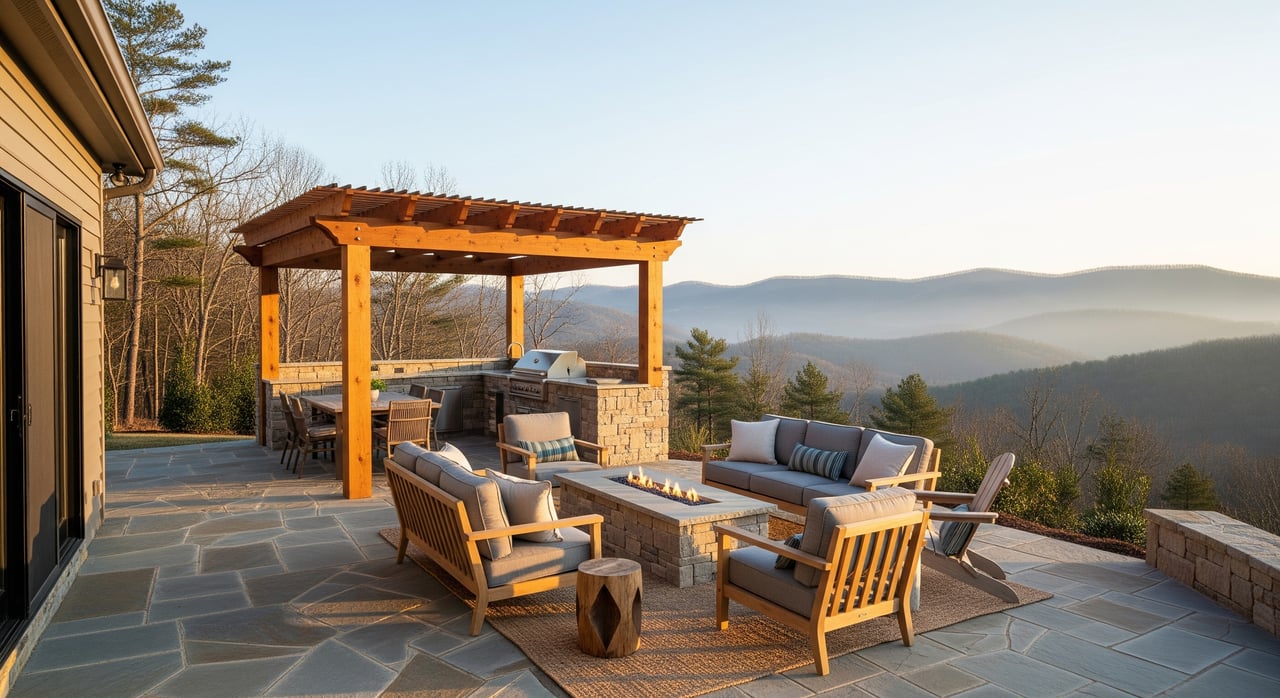
Spring in Black Mountain has a way of showing you what your outdoor space needs. Maybe your deck is slick after every rain, your patio shifted over winter, or the mosquitos chased you inside last summer. You want a space that works year-round, looks great, and holds value if you decide to sell.
In this guide, you’ll learn which upgrades perform best in our mountain climate, how to avoid common pitfalls, what permits to expect, and which choices typically appeal to future buyers. Let’s dive in.
Black Mountain climate basics
Black Mountain’s elevation brings four real seasons with more wind, rain, and freeze–thaw cycles than the lowlands. Sloped, wooded lots are common, and humidity lingers through summer. Those conditions shape smart outdoor design.
- Plan for drainage and ventilation to fight rot, mildew, and slippery surfaces.
- Use frost-resistant footings and patio bases to reduce heave and cracking.
- Manage runoff and erosion on slopes with grading, retaining solutions, and permeable surfaces.
- Create defensible space around structures and fire features on wooded lots.
Decks: build for our climate
A great deck starts with structure, moisture control, and safe surfaces. In a humid, four-season environment, ventilation under the deck, proper flashing where it meets the house, and slip-resistant walking surfaces matter.
Design and performance
- Provide airflow under and around the deck to minimize rot and mold.
- Use frost-protected footings and confirm depth per local code.
- Address sloped yards with tiered decks, safe stairs, and sturdy railings.
- Choose textures that stay grippy when wet.
Materials that work here
- Pressure-treated pine: budget-friendly, treated for rot and insects. Requires sealing or staining every 1 to 3 years.
- Cedar: naturally decay resistant and good looking. Still needs periodic sealing.
- Tropical hardwoods like ipe: very durable with a long lifespan. Higher cost and needs upkeep to maintain color.
- Composite decking, especially capped composites: low maintenance and resistant to rot and mildew. Higher upfront cost and requires careful flashing at the house.
- Aluminum decking: durable, noncombustible, and low maintenance. Premium price with a modern aesthetic.
Hardware and moisture control
- Use stainless steel or hot-dip galvanized fasteners and connectors.
- Flash the ledger correctly where the deck meets the house. Improper flashing is a common source of rot.
Maintenance and resale
- Clean surfaces regularly. Wood needs cyclical sealing or staining. Composites need periodic washing.
- Covered or partially covered decks increase usability and often boost buyer appeal.
Screened porches and three-season rooms
Screened porches give you fresh air without the bugs, and they can extend your usable living space in a buyer-friendly way.
Design and comfort
- Choose foundation type based on site, from piers to slabs, to handle frost and moisture.
- Ventilate ceilings and soffits to limit condensation and mold.
- Consider subtle heat sources like electric or gas to stretch shoulder seasons.
Screens and finishes
- Fiberglass mesh is cost-effective, aluminum is more durable. Specialized screens can improve sun control or pet resistance.
- Use rot-resistant framing or low-maintenance aluminum or vinyl systems.
- Pick slip-resistant and frost-tolerant flooring like composite, properly rated tile, or sealed wood.
Maintenance and resale
- Inspect screens and seals, and keep wood protected with paint or sealer.
- If you add glass or removable panels for three or four-season use, expect additional permitting and insulation needs that can increase value and cost.
Stone and paver patios
A stable patio comes down to base prep, slope, and materials that handle freeze–thaw cycles.
Base and drainage
- Build on a compacted aggregate base with a slight slope away from the house.
- Use geotextile on slopes or weak soils and consider permeable systems to reduce runoff and stress.
- Add edge restraints and the right joint material, such as polymeric sand or appropriate grout.
Material choices
- Natural stone like flagstone or bluestone: classic and durable. Thickness can vary, so skilled installation matters.
- Concrete pavers: consistent, engineered for interlock, and versatile on slopes.
- Broom-finished concrete slab: cost-effective for larger areas but more prone to cracking.
- Gravel or decomposed granite: rustic and permeable, with more ongoing maintenance.
Care and resale
- Sweep organic debris, reset any stones that settle, and re-sand or reseal joints as needed.
- Avoid salt-based deicers in winter. Use sand for traction.
- Well-drained, low-maintenance patios read as quality to buyers.
Fire features that are safe and code-smart
A fire pit or outdoor fireplace can be a perfect mountain gathering spot when installed with safety and permits in mind.
Types and fuel
- Portable units are flexible and often do not need permits if they meet local rules.
- Built-in masonry or prefabricated units typically require permits and inspections.
- Wood offers classic ambiance but produces smoke and embers. Gas burns cleaner and is easier to control.
Safety and wildfire awareness
- Keep safe clearances from structures, property lines, and vegetation.
- Use noncombustible pads and maintain a clear buffer on wooded lots.
- Check with the local fire marshal for restrictions and best practices.
Insurance and resale
- Confirm your homeowner’s policy coverage for fire features.
- Document permits and installation. Buyers value safe, well-scaled, and properly inspected features.
Permits, codes, and HOA checks
Rules vary by jurisdiction, so start early and plan for permits when needed.
Common permit triggers
- Decks attached to the house or elevated above grade often need building permits.
- Screened, roofed, or conditioned porches usually require structural and sometimes electrical or HVAC inspections.
- Built-in fireplaces, gas lines, and permanent hardscape elements commonly require permits.
- Unroofed ground-level patios may not need permits, but retaining walls and foundation work often do.
Who to contact
- Town of Black Mountain Planning and Inspections for homes inside town limits.
- Buncombe County Building Inspections for properties in unincorporated areas.
- Local fire marshal for fire feature setbacks and gas line rules.
- Your HOA or neighborhood association for design and material approvals.
Keep records
- Save permits, plans, inspection sign-offs, warranties, and photos. These documents smooth closings and reassure buyers.
Plan your project step by step
- Define your goals: more dining space, bug-free lounging, or a year-round hangout.
- Assess your site: slope, drainage paths, tree cover, and proximity to the house.
- Choose materials: match maintenance level to your lifestyle and budget.
- Budget and timeline: include permits, inspections, and seasonal weather windows.
- Engage pros as needed: builders, masons, electricians, gas fitters, and landscape specialists.
- Pull permits and coordinate inspections before work begins.
- Build for safety: proper flashing, footings, railings, and slip-resistant surfaces.
- Maintain and document: keep receipts, warranties, and a simple log of care.
Resale and ROI: what buyers value
In our market, buyers tend to prefer outdoor spaces that are usable most of the year, easy to maintain, and clearly built to code.
- Low-maintenance materials like composites and aluminum railings draw interest.
- Covered or screened areas extend use through rain and shoulder seasons.
- Classic design that fits the home and lot usually beats highly customized styles.
- Proper permits and documentation reduce buyer risk and support your asking price.
If you plan to list within a year, focus on upgrades that add usable space, improve drainage and safety, and minimize ongoing maintenance.
Common mistakes to avoid
- Skipping drainage or ventilation, which leads to rot, mildew, or heaved surfaces.
- Improper ledger flashing at the house, a frequent cause of hidden water damage.
- Using non-compatible fasteners that corrode in treated wood.
- Oversizing features that crowd a small yard or block views.
- Ignoring wildfire risk with wood piles, overhanging limbs, or combustible surfaces.
- Forgetting permits or HOA approvals, which can complicate resale.
DIY or hire a pro
Some tasks are approachable, but many mountain-lot projects benefit from professional help.
- Good DIY candidates: gravel paths, basic planting around hardscape, simple furniture or lighting using plug-in fixtures.
- Hire licensed pros for: decks attached to the house, structural work on slopes, retaining walls, electrical circuits, and gas lines for fire features.
Ready to explore homes or upgrades?
Whether you are planning a spring refresh or preparing to sell, you do not have to figure it out alone. With practical construction insight and a vetted vendor network, Rebecca Lafunor can help you prioritize the right outdoor projects, connect with trusted local pros, and align upgrades with your goals in the Black Mountain market.
FAQs
Do I need a permit for a deck in Black Mountain?
- Often yes if it is attached to the house or above a certain height. Contact Town of Black Mountain Planning and Inspections or Buncombe County Building Inspections for specifics before you start.
Which decking material lasts longest in a humid mountain climate?
- Tropical hardwoods and high-quality capped composites generally offer long lifespans when properly installed with good ventilation and maintained.
Are wood-burning fire pits allowed in Buncombe County?
- Restrictions vary by location and season. Check with the local fire marshal and your HOA to confirm what is allowed on your property.
How can I prevent frost heave under a patio?
- Use a compacted aggregate base, slope for drainage, consider geotextile on problem soils, and choose permeable systems to reduce water buildup.
What outdoor upgrade gives the best resale appeal locally?
- A well-built, low-maintenance deck or a screened porch that adds usable living space and has clear permits typically resonates with buyers.
What annual maintenance should I plan for outdoor spaces?
- Clean surfaces, re-seal wood as needed, refresh paver joints, keep drainage paths clear, and document any repairs or service for future buyers.